
In this article
As of this blog post, Palworld is preparing to debut its official card game in July/August of 2026. To help you prepare for the release, we'll help cover how you can play the game, what it's all about, and where you can play it near you!
Deck Format
Your main deck in the game will be made up of 50 cards total.
Your main deck will consist of Pal Cards, Structure Cards, Gear Cards, and Event Cards.
You will also need a Soul Deck, made up of 10 soul cards.
Gameplay Reference
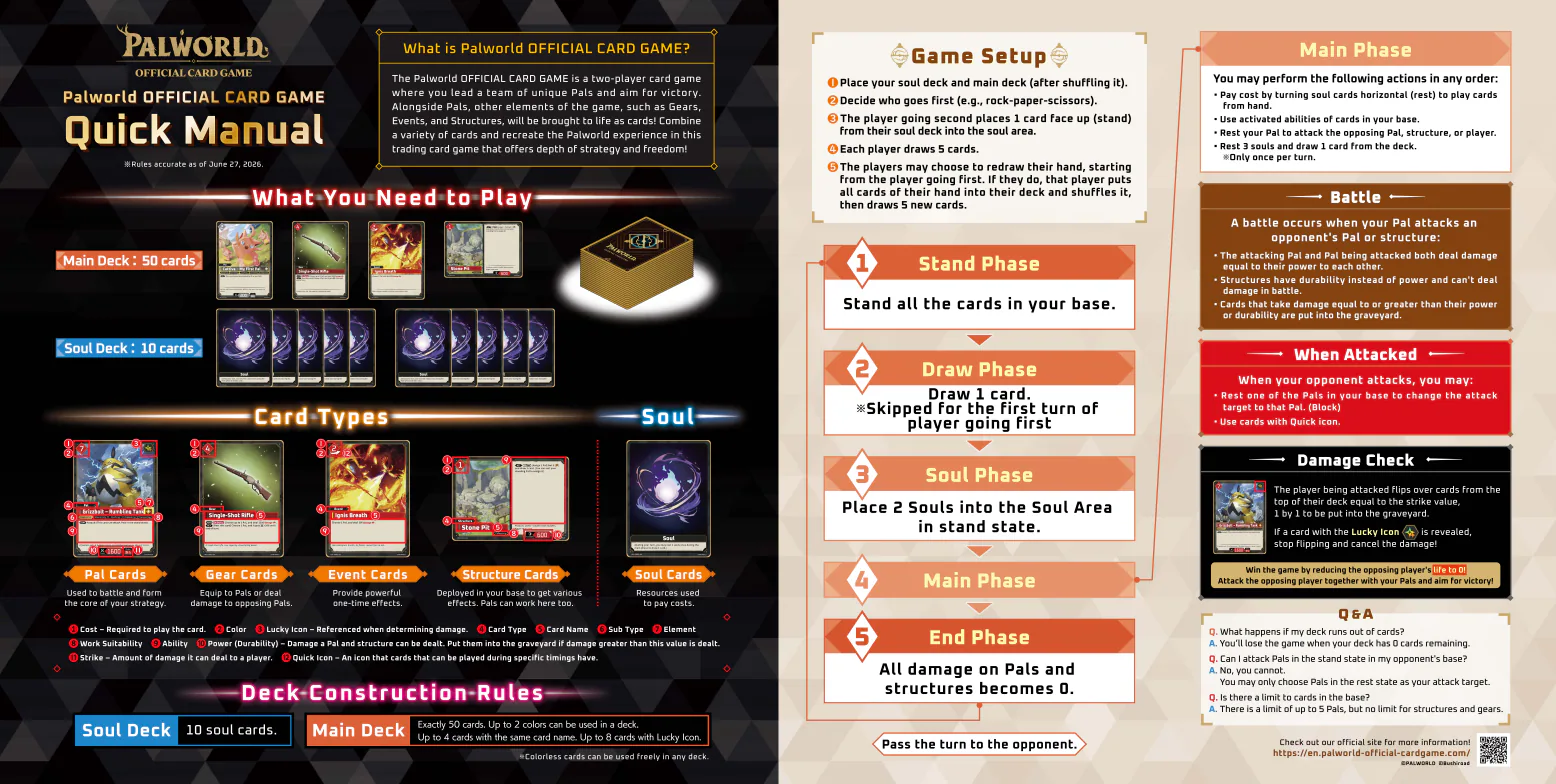
Just looking for a quick reference on rules and phases for your turn, and don't have time to read our more thorough breakdown? We've still got you covered! An official Play Guide graphic from the Palworld TCG team can be found here as a little cheat-sheet:
Game Board
The first thing you'll need to know and recognize is the game board. This is the core layout that you'll need to know to play, which might look super familiar to anyone already familiar with card games / TCGs!
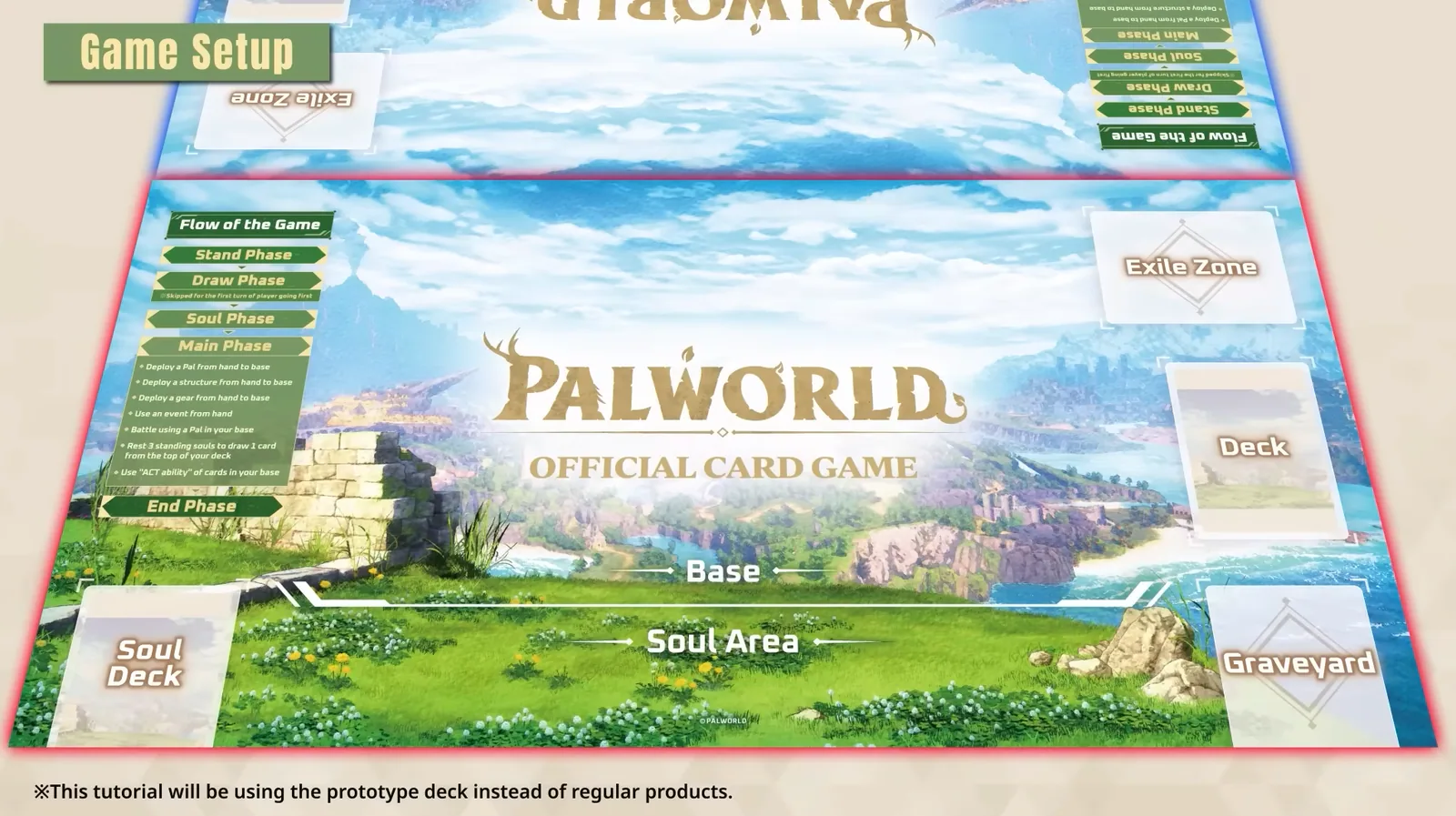
To break down what each of these areas are:
Deck: This is where your actual full deck of cards will go that you pull from throughout the match. It won't move during the match, so you can just set aside your full 50-card main deck and set it aside in that area. If you run out of cards in your deck, you will also lose the game.
Soul Deck: This is where you'll place your 10-card soul deck. Just like the main Deck, no need to worry about this for now once you've set the cards aside!
Exile Zone: This is where Pals that you've played will go if they have been "Exiled" - this is an effect specific to cards and actions that may specify to send something to your Exile Zone instead of your Graveyard.
Graveyard: This is where Pals will go after they have been defeated. We will also be able to cover this in more detail during the gameplay section.
Base: This is where you'll play your Pals (or gear) during the game for combat so they can perform actions.
Soul Area: This is where you will handle the "Soul Phase" of your turn, and will use the "Souls" resource from your Soul Deck (this will be explained more later).
Once you understand the core layout of the game board, you're ready to play!
How to Play
1: Prepare the Board
Shuffle your 50-card Main Deck, then place it in the Deck area of the game board off to the right.
Place your 10-card Soul Deck in the lower-left area of the game board in the general "Soul Deck" area.
Both players start with 10 life points. You can place your Pal Sphere token on the Life Counter board on the number 10 to indicate your current life value (reducing your enemy's life points to 0 will win you the game).
Decide who goes first (the method is up to you! But rock/paper/scissors is always a safe bet).
The player who goes second may draw a soul card from their soul deck, and place it upright in their Soul Area.
Draw 5 cards from your main deck. This will be your 'hand' (the available cards you have to play on your turn).
NOTE: You may redraw (mulligan) your cards if you aren't happy with what you got. To do this, you'll return the 5 cards to your deck, shuffle thoroughly, then draw another 5 cards. This can only be done once.
2: Play Out Your Turn(s)
Turns in the Palworld Official Card Game are broken up into 5 main phases. you will go step by step through these phases to complete your turn, in the following order:
Stand Phase: If you have any "tapped/rested" cards (cards that have been rotated 90 degrees after using an action to indicate that their ability was used; not relevant on your first turn), you will turn them upright at the start of your turn. This includes all types of cards unless specified otherwise.
Draw Phase: Draw a card to your hand at the start of your turn. Skip this phase on the first turn of the game (player going 1st only; the second player may draw a card on their first turn).
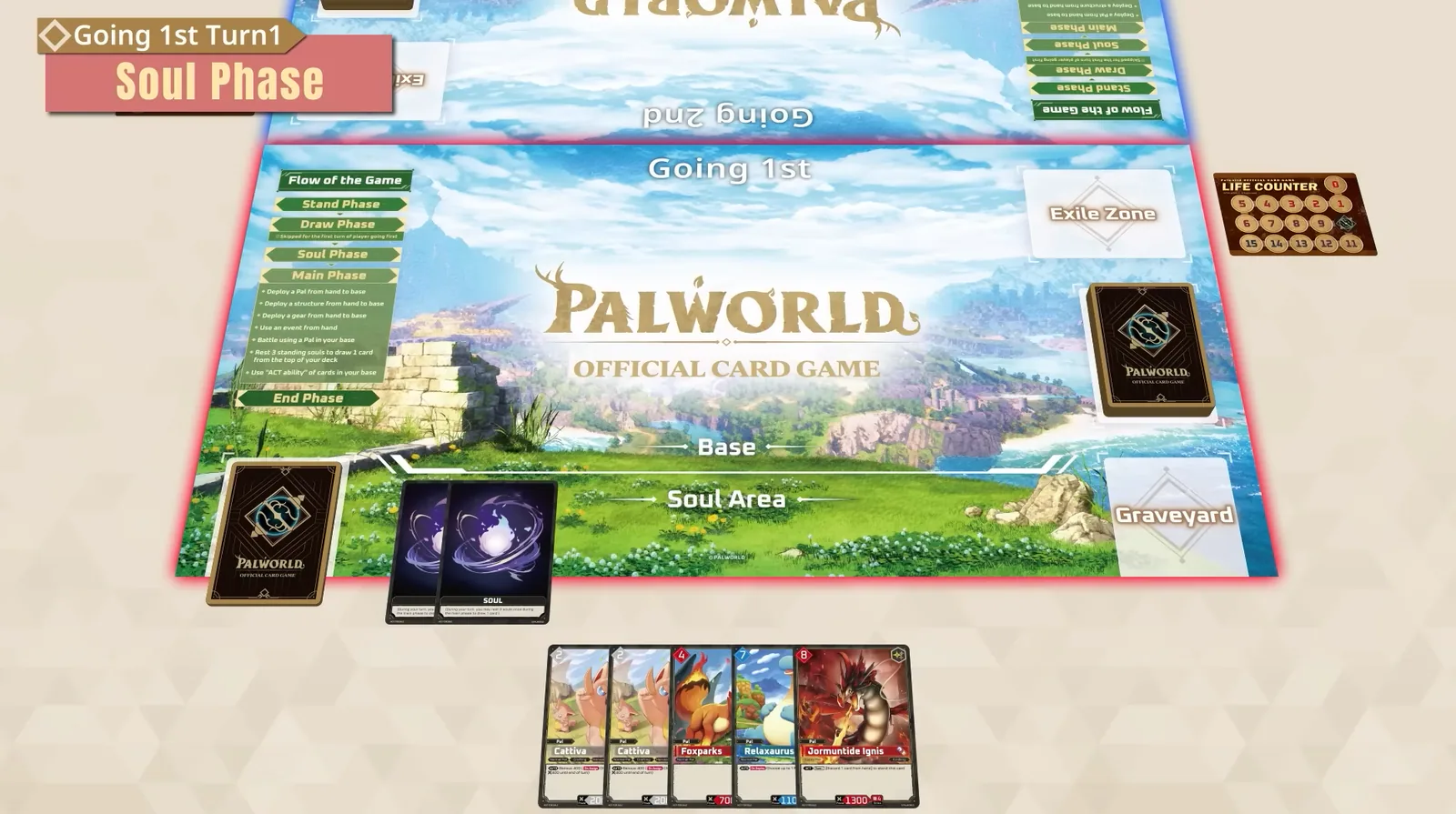
Soul Phase: Place 2 souls from your soul-deck upright in your Soul Area. You will gain 2 souls this way every turn, up to a max of 10 (hence having only 10 soul cards). At this point, your board should look something like this:
Main Phase:
This is your main action phase of your turn. During this phase, you can perform the following actions in any order you want and as often as you can (you may attack, then deploy a Pal, then attack again, for example):
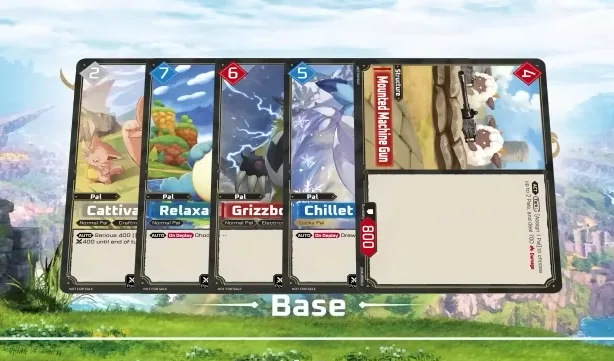
Deploy a Pal from your hand to your Base: At the top left of any card, you will find a diamond shape with a number in it. That is the "soul cost" of that card, which determines how many souls in your soul area you must have available (upright) in your Soul Area in order to play the card. To play a Pal card in this way, you can "rest" a number of soul cards equal to the soul cost of the card by turning upright soul cards 90 degrees, and moving the Pal from your hand to your Base. You may have a maximum of 5 Pals in your base at one time.
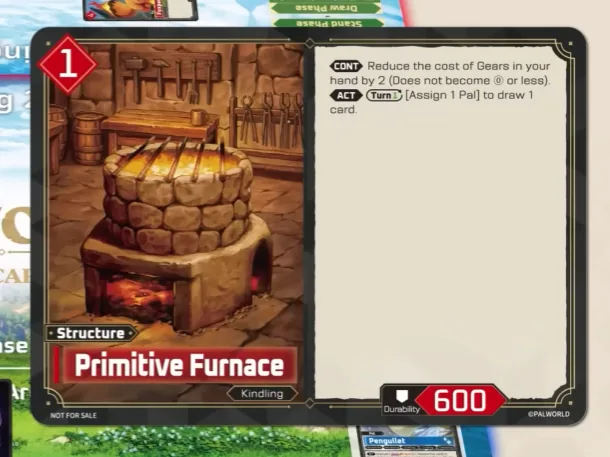
Deploy a structure from your hand to your Base: Just as you would deploy a Pal, you could also deploy a "Structure" card from your hand using the cost value at the top left of the Structure card. These cards can NOT attack, but can be attacked, and will be destroyed if their total "Durability" value is reduced to 0 via attacks. Structure cards allow you to make use of various actions (abilities you can use from the structure during your turn) and continuous effects (effects that are always active for you as long as the structure is in your base).
Structure cards may allow you to "Assign" pals to the structure in order to enable certain effects. In the case of the Primitive Furnace card here, this means you could Rest another Pal in your base to assign it to the furnace, allowing you to draw 1 card.
NOTE: There is no limit to how many structures you may deploy to your base.

Deploy gear from your hand to your Base: A gear card is deployable to your base just as you would any other card by resting souls equal to the cost in the corner of the gear card. In this case, we can see the "Single-Shot Rifle" card being played. This card has an AUTO (On Deploy) effect, which means it will process the effect as soon as it is played. It also has an ACT effect, which is an effect you can activate on your turn by resting the card.
Following the example of Single-Shot Rifle, the AUTO effect allows you to choose 1 Pal on the field and deal 1000 Damage to them immediately after being played, which you can activate immediately without needing to rest the card, either.
Activate an event from your hand:
Battle using a Pal in your Base: Pals you place at your base can be used for an attack/action immediately after deploying the card, or on any turns afterwards as long as they are not rested. If you have a Pal in your base, you may rest the card (rotate it 90 degrees), and make an attack.
Attacking the other player: When you attack the other player with a Pal, you will use the "Strike" number at the bottom right of a Pal card. This number indicates how much damage you will deal to the opponent's Life Counter.

When Taking Damage: Whenever you (or your opponent) would be to take damage to their life counter, they will perform a "Damage Check," which allows them to flip draw and flip over a number of cards from the top of their deck equal to the total Strike value / damage you would take. If one of these cards has a "Lucky" icon on it, you take no damage! Regardless of outcome, the player who performed a damage check will move these flipped cards into their Graveyard.
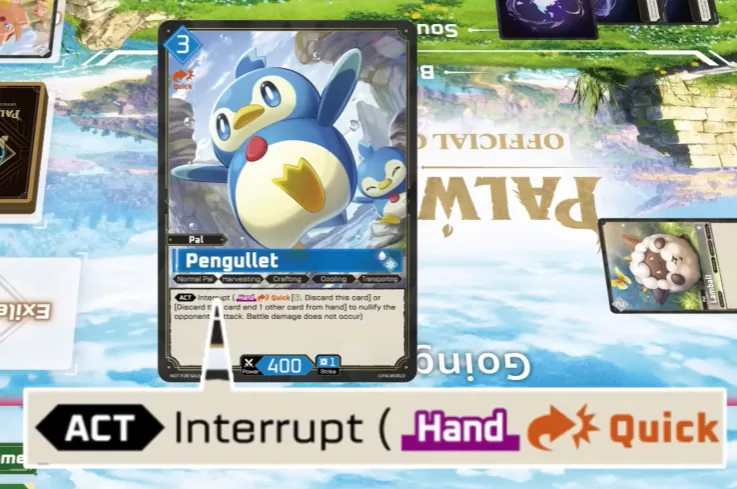
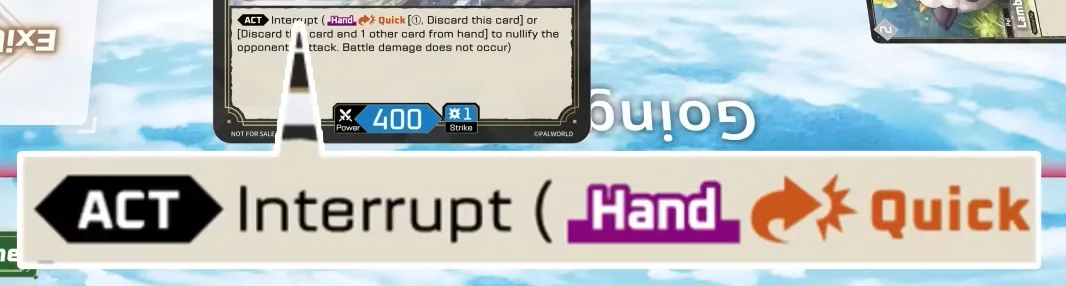
Interrupting an Attack: If you are attacked by your opponent, you may use certain cards from your hand with the "Quick" status. This allows you to play the card from your hand to activate a certain function on the card, even when it's not your turn. In this example, a Pengullet card is used, which has the "Interrupt" ability. As specified on the card, you can rest 1 soul from your soul area or discard 1 card from your hand to activate the effect, nullifying your opponent's attack against you.
Blocking an Attack: The more straight-forward way of defending against attacks is to Rest a 'standing' Pal in your Base area to block the enemy attack. This will initiate a combat check, with both Pals dealing damage to eachother at the same time; as a result, it is possible for both Pals to be sent to the Graveyard this way in the case of a tie.
Attacking an enemy Pal: You may also choose to attack a Pal in your opponent's Base area. You may only attack a Pal that is rested/rotated horizontally. When you battle between pals, you will want to look at the "Power" number in the bottom center of both Pal cards. Simply put, the Pal with the bigger number wins, and the losing Pal is moved to the Graveyard (if their power ties, they still get sent to the Graveyard)!
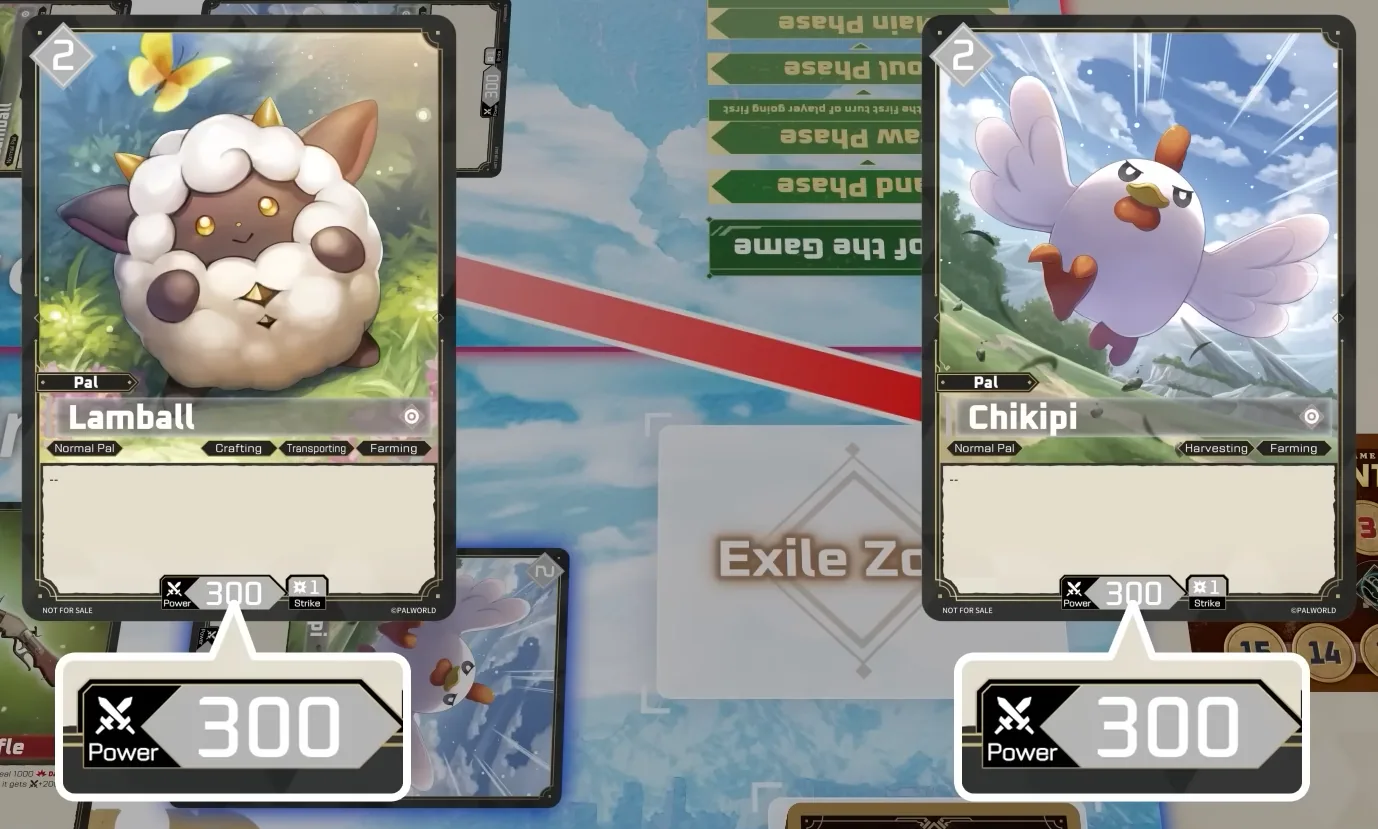
NOTE: After doing battle with another Pal, your attacking Pal's power is reduced to the difference in power until your turn ends. So if you attack a 100-power Pal with a 300-power Pal in your base, your Pal's total power will be reduced to 200 until your turn ends.
"Rest" 3 standing souls to draw 2 cards from the top of your deck: This is a useful ability for when you are struggling to keep up with cards in your hand. When you have at least 3 souls unrested in your Soul area, you can Rest 3 of them to draw the top 2 cards of your deck.
Use the "ACT Ability" of a card in your hand: If any cards in your hand have an "ACT" ability that specify HAND as the location you can play from, you may activate these effects directly during your turn.
End Phase:
This is the end of your turn. Any cards or effects triggered when your turn ends will process at this time.
Also note that any reduced Power from Pals resulting from battles during your turn will also reset during this phase, restoring them to full Power unless specified otherwise by outside card effects.
Where to Play
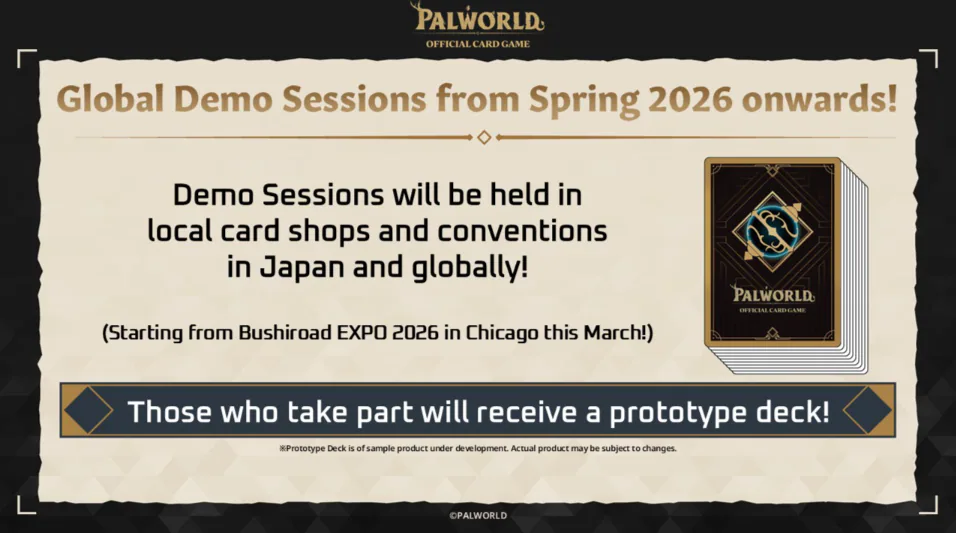
Card Games are better in person, when possible! Thankfully, the team behind the card game helps promote events and demo sessions for the game at various stores across the world. You can find out more on any potential events near you from their official events page!
Play the Original Game
Looking for more Palworld content in between card game sessions? Consider starting up a 24/7 multiplayer server so you and your friends can hop on and play the main game itself!
Kinetic Hosting's Palworld server hosting makes this totally risk-free thanks to our 7-day money back guarantee if you're not happy with the service provided, and our human support team is always here to help! Or, you can consider just following along with our blog here as we continue to keep you updated on news from the game as it continues to grow as a franchise.